


Analysis summary
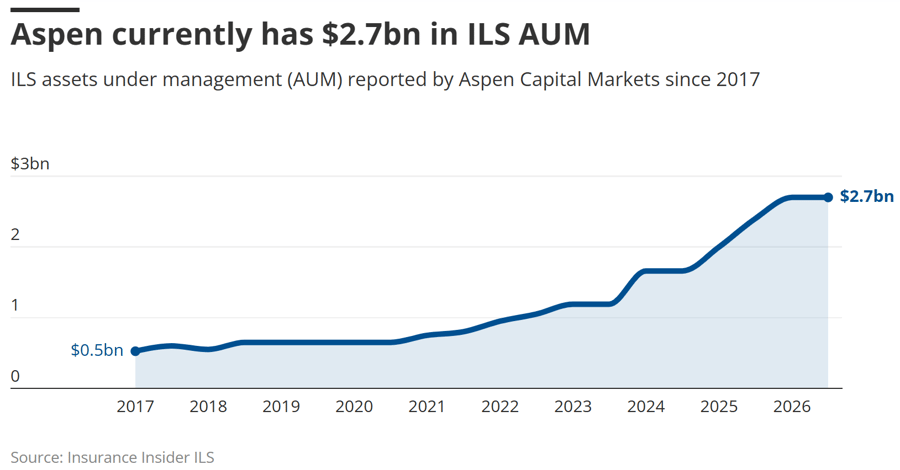
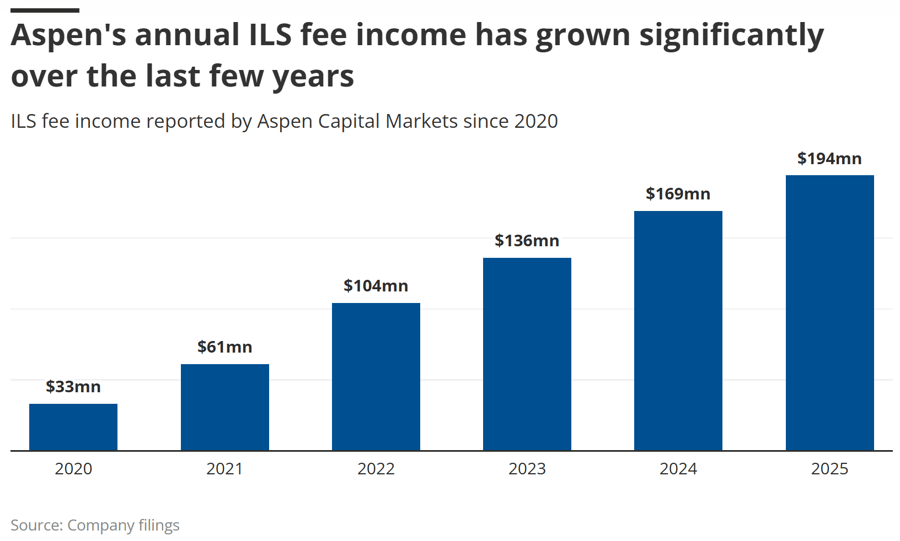
Sompo Capital Markets has lost the two senior leaders who ran Aspen Capital Markets before Sompo's acquisition of Aspen. Neville Weston, Sompo's head of global distribution and product development, has taken charge of the unit's sidecars. The business held $2.7bn in assets under management at the end of 2025, up 23% year on year, with fee income of $194mn. Fiona Robertson examines what the departures mean for investor relationships, and for reinsurer-aligned ILS managers navigating a softening market.Subscribe to get comprehensive access to our exclusive analysis in the full platform.

The softening market accentuates the challenge for reinsurer-aligned managers in messaging.
Sompo has had a fraught relationship with ILS acquisitions. When Sompo International ended up as the owner of Blue Capital ILS (which had shuffled through from Montpelier Re to Endurance and then to Sompo), it wound up with an underweight ILS business that it ultimately shut down in 2019.
A once-sceptical approach to ILS, however, has clearly evolved in the other direction in the post-Covid era. When it honed in on Aspen, the pre-deal presentation materials highlighted the attraction of Aspen Capital Markets business. At the time, CFO Nicolas Burnet commented on how “financially attractive” the ILS business was, and said it would give the carrier balance sheet flexibility.
The recent news that Sompo Capital Markets had lost its two top ILS leaders, both formerly of the Aspen Capital Markets business, as revealed by this title, does not indicate a repeat of the Blue Capital scenario.
But it creates a more difficult integration challenge for the ILS business – given that no parallel unit existed at Sompo – and one the carrier will have to navigate with care.
Any change to key personnel can be a destabilising force to personal investor relationships that have formed part of mandate allocation decisions.
Sources told this publication that Sompo was keen to continue ceding risk to third-party providers and had put its head of global distribution and product development, Neville Weston, in charge of the unit’s sidecars. (Sompo itself did not respond to requests for comment.)
Some key factors make the Sompo Capital Markets fit a more natural inclusion than the Blue Capital business. That unit offered listed funds, which was a more structurally cost-heavy way of operating an ILS unit relative to one reliant on quota share cessions.
The Aspen unit also had critical mass, reaching $2.7bn of assets under management at the end of 2025 – up 23% year on year – and producing a 15% uplift in fee income to $194mn for the year.
It remains to be seen whether Sompo will recruit a head of capital markets business whose primary focus is on that division, although it is notable that Weston has ILS expertise after a long stint at Aeolus.
More broadly, the transition highlights that one of the challenges with aligned reinsurer-ILS managers is doing enough to ensure investors feel their interests, as well as those of the parent, are being looked after.
This can mean different things to different investors. For some, the alignment of a proportional quota share may be strong enough in itself. Others, especially those for a fiduciary asset manager, may want to see more independent infrastructure in place to carry out checks and manage conflicts.
Aspen Capital Markets had previously been a quota-share-led manager rather than offering specifically created funds for investors in that fiduciary vein. But even so, moving from having a leader fully focused on that business to one covering both Sompo core and capital markets functions ups the ante on maintaining investor communications and support.
Also, the softening market cycle accentuates the challenge for carrier managers in walking the line between talking up the advantage of reducing net exposures and taking additional fee income – both of which should play well to equity analysts – and delivering the pitch that makes third-party investors comfortable at a time when the balance sheet may be retaining less risk.
Fundamentally, those two differing communication needs for the equity or third-party channels are at odds. For the investor relations teams at reinsurer managers, reconciling those messages and trying to find areas of alignment in them is the core challenge.
Ultimately, if Sompo is to make a success of the capital markets unit, which was one of the few non-overlapping parts of the combined Sompo International-Aspen book, it will need to walk these balancing lines with care.
By Fiona Robertson
03 August, 2026
Request your free trial today to unlock our complete intelligence platform. .svg)

Cedants and investors explore casualty ILS structures as segment expands
Read More
MGAs break free from the market cycle as new forces reshape the model
Read More