


Analysis summary
How did the 9/11 attacks reshape the insurance market? They remade terrorism cover worldwide, hit lines of business that had never before suffered a catastrophe, and changed how the industry writes wordings and models extreme events. This analysis shows how blanket exclusions led to the US Terrorism Risk Insurance Act and government-backed schemes in seven other countries, why estimates of insured losses run from $40bn-$50bn at the time to around $62bn in 2025 money, and how litigation over whether the attacks were one occurrence or two left some claims unresolved for 17 years. It delivers fast insight on the tightening of terms at the 1 January 2002 renewal, the rise of realistic disaster scenario testing, and the human cost to the industry.Subscribe to get comprehensive access to our exclusive analysis in the full platform.
One of the most pivotal market events in the past 30 years continues to influence the insurance landscape today.
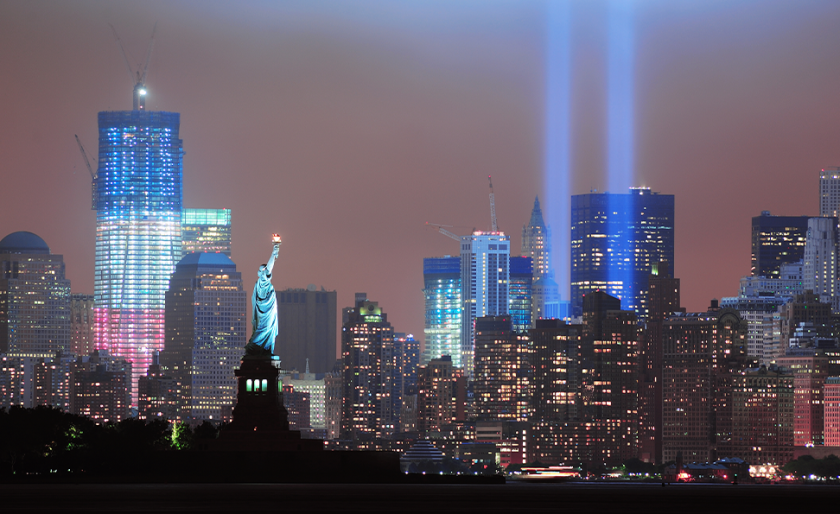
Of all market-shaping loss events of the past 30 years, none have had a more profound impact on people, business lines, pricing, policy wordings, modeling and risk assessment than the 9/11 terrorist attacks.
The incident recreated and reshaped the terrorism market. Blanket exclusions prompted the US administration to introduce the US Terrorism Risk Insurance Act, a seminal piece of legislation that brought in a federal backstop to share terror-related losses with (re)insurers.
After 9/11, seven other countries established government-backed safety nets to disburse terrorism coverage between the public and private sectors. These included Extremus in Germany, GAREAT in France, the Australian Reinsurance Pool Corporation and NHT in The Netherlands.
Two further countries with pre-existing state backstops – Spain with CCS and the UK through Pool Re – extended coverage to encompass a wider range of terrorism risks.
When the US House of Representatives passed legislation in June 2026 to extend the backstop to 2034, Jimi Grande, SVP of federal and political affairs at the National Association of Mutual Insurance Companies, said it had “enabled virtually every large-scale development anywhere in the country over the past quarter century”.
Beyond forging new structures of terrorism coverage globally, the attacks had a financial impact that spread far beyond a historic loss quantum.
There has been a divergent range of estimated industry insured losses. In 2002, the Geneva Association pegged the loss range at $40bn-$50bn. In 2021, Moody’s published a retrospective analysis putting the figure at $47bn.
Adjusted for inflation at 2025 money, insured losses would be around $62bn, based on more recent estimates including from the Insurance Information Institute in 2021.
Another striking aspect of 9/11 was the speed and potency of the disruption it drove across so many business lines. Property, workers’ compensation, aviation, A&H, business interruption (BI), life, event cancellation and other forms of liability were all deeply impacted.
In its 2002 analysis, the Geneva Association said the attacks “produced catastrophic losses in lines of insurance that had never before experienced catastrophes”, citing $11bn in BI and $3.5bn in aviation liability (both in 2002 money).
Amid historically high payouts, Copenhagen Re and Japanese reinsurer Taisei were among a low number of reinsurers whose losses tipped them into insolvency. However, the $27bn of reinsurance that was in play for 9/11-related loss settlements staved off a surge of further insolvencies among primary carriers.
Simon Bird, group executive underwriter at Brit Insurance, who joined the firm in 2000, said: “9/11 catalyzed the entire industry. 1999 and 2000 had been poor underwriting years, with lots of attritional losses and under-pricing. Overnight, the industry then took a loss that impacted pretty much every segment of the market.”
Pricing changed rapidly in property, aviation and terrorism, though contract wording changes were equally swift. At the 1 January 2002 renewal, terrorism exclusions were brought into property treaties.
David Govrin, now group president and CEO of global reinsurance and London market specialty at SiriusPoint, was at Goldman Sachs in 2001, but worked with the insurance industry at the time.
He told Insurance Insider in 2026: “The complexity surrounding the World Trade Center placements highlighted that understanding what was covered was every bit as important as understanding the risk itself.
“While the industry immediately began reassessing exposure and correlation, tightening terms and conditions became the first and most practical way of managing uncertainty.”
New forms of modelling emerged to tackle this uncertainty and a new reality of total losses on properties that previously had been unthinkable.
Up until 9/11, modelling had been heavily focused on historical data and stochastic outcomes. Modelling alone, especially for extreme events, could no longer be the only source of estimating severe outcomes.
“In many ways, 9/11 was the catalyst for the sophisticated realistic disaster scenario testing we see across the market now,” Govrin added.
The litigation onslaught
As would be expected, the major European (re)insurers – Swiss Re, Allianz and Zurich – along with XL, AIG, The Hartford and Chubb had heavy exposure to the collapse of the towers, though many claims were mired in litigation. Some cases would not be resolved for 17 years.
At the crux of the litigation was whether the attacks constituted one or two occurrences. Property developer Larry Silverstein, leaseholder of the World Trade Center, claimed for $7.1bn, arguing the attacks occurred as two distinct events (the towers were insured at $3.55bn per occurrence).
Ultimately, a federal court decision favored the insurers in the key lawsuit, defining it as one event.
This meant Swiss Re, for example, was liable for $877mn rather than double that amount, though the vital lesson was on ambiguity in contract wordings on defining and quantifying distinct "events" and "occurrences".
For many reinsurers, the biggest single component of their cat loss from 9/11 was the Chubb program. Some carriers had been weighing up the extremely sensitive issue of whether to invoke act-of-war exclusions, but Chubb issued a press release early on, stating it would honor all claims. Other insurers followed suit soon after.
John Degnan, Chubb vice chair at the time, explained this stance to the US National Commission on Terrorist Attacks in 2003, while giving examples of the pressure staff faced: “Typically, a work comp' adjuster handles one or two workplace fatalities a year. Here, we were facing over 900 death claims alone, apart from injuries.”
As with any retrospective on 9/11, the human cost to the industry must be remembered. Marsh lost 295 employees and 63 consultants. Aon lost 176 colleagues.
Both companies had sizeable offices in the World Trade Center and set up emergency help, along with financial and wider support programs – including counseling – for the families of deceased staff.
Marsh established the MMC Victims Relief Fund, backing it with $20mn, to disperse to the families. Aon created The Aon Memorial Education Fund to provide post-secondary educational financial assistance to the dependent children of employees who were killed.
Got a tip for us? Reach out confidentially here.
Frequently asked questions
How did 9/11 change terrorism insurance?
The 9/11 attacks recreated and reshaped the terrorism market. Blanket exclusions prompted the US administration to introduce the US Terrorism Risk Insurance Act, a seminal piece of legislation that brought in a federal backstop to share terror-related losses with (re)insurers.
Which countries set up terrorism schemes after 9/11?
After 9/11, seven other countries established government-backed safety nets to disburse terrorism coverage between the public and private sectors. These included Extremus in Germany, GAREAT in France, the Australian Reinsurance Pool Corporation and NHT in The Netherlands.
What were the insured losses from 9/11?
There has been a divergent range of estimated industry insured losses. In 2002, the Geneva Association pegged the loss range at $40bn-$50bn. In 2021, Moody’s published a retrospective analysis putting the figure at $47bn. Adjusted for inflation at 2025 money, insured losses would be around $62bn, based on more recent estimates including from the Insurance Information Institute in 2021.
Which lines of business did 9/11 affect?
Property, workers’ compensation, aviation, A&H, business interruption (BI), life, event cancellation and other forms of liability were all deeply impacted.
Was 9/11 treated as one event or two?
At the crux of the litigation was whether the attacks constituted one or two occurrences. Property developer Larry Silverstein, leaseholder of the World Trade Center, claimed for $7.1bn, arguing the attacks occurred as two distinct events (the towers were insured at $3.55bn per occurrence). Ultimately, a federal court decision favored the insurers in the key lawsuit, defining it as one event.
How did 9/11 change catastrophe modelling?
Up until 9/11, modelling had been heavily focused on historical data and stochastic outcomes. Modelling alone, especially for extreme events, could no longer be the only source of estimating severe outcomes.
Did insurers invoke act-of-war exclusions after 9/11?
Some carriers had been weighing up the extremely sensitive issue of whether to invoke act-of-war exclusions, but Chubb issued a press release early on, stating it would honor all claims. Other insurers followed suit soon after.
By Marcel Le Gouais
14 September, 2026
Request your free trial today to unlock our complete intelligence platform. 